The Mouvement Alternatives Citoyennes is a Moroccan association founded in 2002.
About us
The Movement is guided by a vision that considers strengthening participatory democracy to be closely linked to enhancing the role of civil society and empowering citizens to participate effectively in public affairs. This vision is grounded in the principle of equality, the integration of the gender approach, and the fight against all forms of exclusion and marginalization.
In this regard, **the Movement pursues two fundamental strategic objectives: strengthening the capacities of civil society and enabling it to participate actively in public affairs; and contributing to the establishment of a participatory democracy based on equality, gender mainstreaming, and the fight against exclusion.**
This vision is translated into a range of programmes and initiatives covering democracy and civic mobilization, gender and equity, governance and public policies, public finances, social development and the solidarity economy, as well as youth empowerment and the promotion of young people's participation in public life.
At the operational level, the Movement has developed substantial experience in supporting civil society and strengthening its capacities. It has supported more than 6,000 youth-led and women's associations through training, capacity-building, mobilization, advocacy, and consultation programmes. It has also worked to strengthen young people's participation in the formulation and monitoring of public policies, consolidate their presence in public life, and facilitate their access to decision-making bodies. In addition, it organizes dialogue and listening spaces that bring together young people, various stakeholders, and decision-makers.
The Movement also attaches particular importance to building the capacities of civil society actors, notably through training sessions in mobilization, communication, planning, and public policy. Some of these initiatives have produced tangible academic outcomes, including the support provided to three doctoral candidates who benefited from training programmes on public policies. These programmes enabled them to develop their research and academic writing skills, as well as to prepare and publish scientific articles in peer-reviewed journals.
Building on this experience, the Movement has developed a network of partnerships and relationships with various national and international institutions. It holds consultative status with the United Nations, is a member of the Open Government Partnership, and coordinates the Civil Coalition for Gender-Responsive Budgeting. It is also a member of the Regional Human Rights Commission for the Fès-Meknès region. Furthermore, its representatives are invited to participate in the Spring and Annual Meetings of the World Bank and the International Monetary Fund.
This experience, developed since the Movement's establishment in 2002 and consolidated through its legal registration in 2004, represents an institutional and operational asset that underpins its commitment to linking civil society capacity-building with advocacy, citizen participation, and good governance. Through these efforts, the Movement contributes to promoting public policies that are more transparent, equitable, and responsive to society's needs.
A vision driven by commitment
President's message
ALCI
President's message
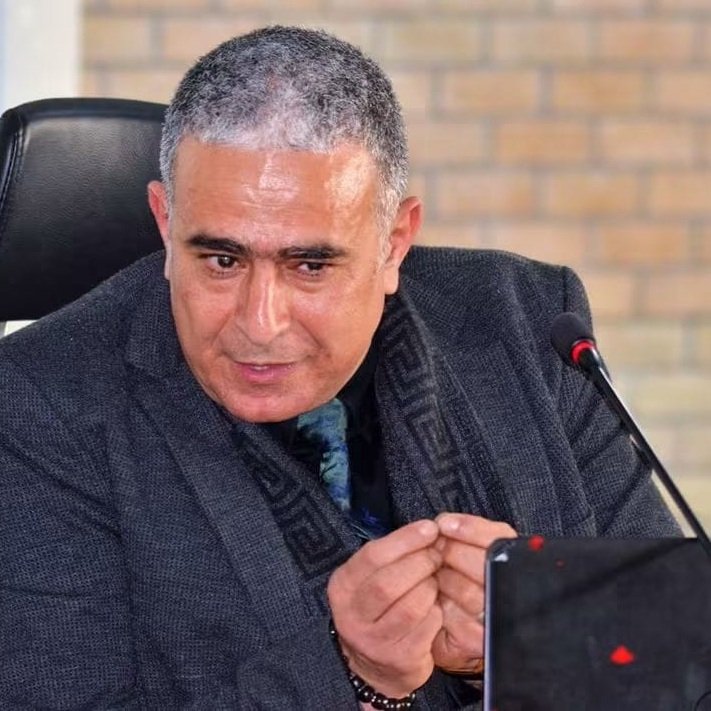
ahmed dahmani
The President’s Message
More Than Two Decades of Commitment… and a Renewed Determination to Drive Change
More than two decades after its establishment, the Mouvement Alternatives Citoyennes continues to play an active role at the heart of the collective struggle for democracy, human rights, equality and justice. Its journey has been shaped by collective action, initiatives, programmes and advocacy, guided by a steadfast conviction: our society can change, and citizens have both the right and the ability to influence the choices that shape their present and their future.
Our ambition has never been to measure our impact by the number of activities we organise, but rather by the changes to which we contribute in power relations, the conditions for participation, and the distribution of resources and opportunities between women and men, across generations and among territories. This is why we have placed our work at the intersection of governance, development and local democracy, while examining the extent to which public policies can uphold rights and reduce inequalities.
Together with civil society actors, political stakeholders and researchers, we have contributed to discussions in favour of strong local development and to public debate on the 2011 constitutional reform. We initiated a national dialogue on the democratic regionalisation we aspire to and the Morocco we envision: a Morocco that embraces its regions and draws strength from their diversity; regions that belong to a shared national project and possess the capacities and resources to determine their own development priorities. In this process, we contributed to the establishment of the Civil Coalition for Democratic Regionalisation, advocating for the democratic distribution of power and development opportunities, as well as genuine solidarity among territories.
We have made the public budget a democratic issue and a human rights concern. Budgets reveal who benefits from wealth, who bears the cost of policy choices, which needs are prioritised and which are postponed. We have conducted campaigns and advocacy initiatives in favour of gender-responsive budgeting, placing women’s rights, needs and participation at the heart of budgetary decisions and public policies. This journey culminated in the launch of a renewed dynamic and the institutionalisation of the Civil Coalition for Gender-Responsive Budgeting in Morocco, which now has ten regional hubs and brings together more than 500 associations. This achievement reflects a conviction to which we remain firmly committed: equality requires decision-making power, a fair share of resources and accountability for results.
We have also accompanied young women and men, as well as youth movements, who believe that another Morocco is possible. We have invested our resources in strengthening their capacities for organisation, initiative and participation in local affairs, development, and the social and solidarity economy. We aspire to a Morocco that recognises young people as active participants in the present, opens up opportunities for influence and leadership, and listens to their criticism and aspirations. Trust is built when young people see their voices reflected in institutions and in the decisions that affect their lives.
In the face of growing inward-looking tendencies and shortcomings in accountability, we have defended the right of access to information, proactive disclosure and the openness of institutions and territorial authorities to citizens. We have worked to strengthen associations’ capacities to monitor, evaluate and advocate on public policies and budgets. We have also sought to connect universities with societal concerns, make scientific research a resource for public debate and the development of alternatives, and defend freedom of expression as an essential condition for participation and the production of independent critical knowledge.
This journey has strengthened our conviction that democracy requires a society capable of organising, expressing itself and exercising oversight; institutions willing to be held accountable; political parties that fulfil their responsibilities in representation and civic engagement; and public policies that address the root causes of exclusion. It has also reinforced our determination to preserve the independence of civil society action and its right to criticise, make proposals and contribute to change. We cooperate with institutions while maintaining our independence, and engage in dialogue with them on the basis of our responsibility towards society and the rights of its members.
Today, the question guiding our work remains clear: how can we turn constitutional achievements and human rights commitments into a driving force that transforms people’s lives? How can we ensure that education, healthcare, employment and social protection become effective rights? And how can we ensure that people living in rural areas, mountainous regions and marginalised territories have a fair place in decision-making, investment and access to services?
We are opening this platform as an extension of our commitment: a space for knowledge, debate and informed positions, as well as for sharing experiences and developing initiatives. Through it, we seek to broaden the scope of collective action with all those who believe that Morocco’s future deserves broader participation, greater willingness to question policy choices, and a collective determination to build alternatives.
After more than twenty years, we remain committed to building a Morocco in which power, wealth and opportunities are distributed fairly; freedoms are protected; equality becomes a lived reality; and human dignity stands at the heart of development, both as its ultimate purpose and as the standard by which it is measured.